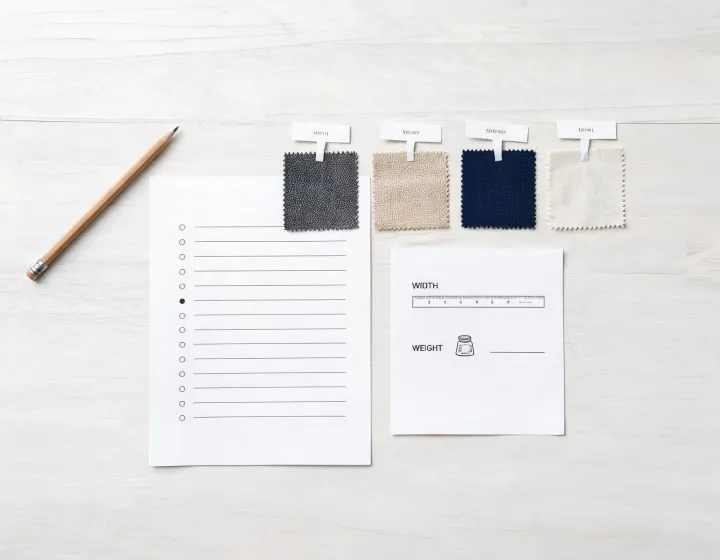
01 · Define the fabric reference
Name the upholstery end use and the article or reference swatch. Record fiber composition in percent by fiber, weave, GSM, usable width in centimeters or inches, color, backing and finish. Keep tolerances explicit and distinguish nominal full width from usable cutting width. Supplier-proposed substitutions need a marked deviation, especially when yarn count, construction or surface finish changes.
02 · Agree evidence before testing
For abrasion resistance, colorfastness, pilling, lightfastness or a flame requirement, request the method and edition, agreed threshold, specimen identity, conditioning and laboratory report date. Ask whether the sample includes the proposed backing and finish. The ASTM textile method index and AATCC listings help identify questions; a listed method is not a test result.
03 · Name each approval release
Separate the selection swatch, lab dip for shade, strike-off for printed appearance, pre-production sample and bulk dye-lot review. Record sample reference, reviewer, date and accepted deviation. Plan a roll-inspection basis for length, shade and visible defects. An earlier sample cannot establish every bulk roll’s appearance, dimensional stability or seam behavior.
04 · Put cost and timing on one basis
State quantity per color and total with yards, meters or rolls, the US destination and required sample and bulk dates. Ask for minimums, roll format, testing, packing, freight and payment inclusions. Budget targets need a currency and per-unit or whole-order basis. A cheaper stock article may fit a flexible brief; custom development may better match a specific weave while adding minimums and approvals.
05 · Close open decisions without hiding differences
Compare the proposed suppliers using the same fields. High-end, mid-range, budget or undecided is a buyer preference about cost, appearance and service, not a verified supplier tier. If a supplier offers a family certificate, request its scope and exact-article connection. Product and supplier documents remain their evidence; MaterialLink does not claim these credentials as its own.